The Liveline journal
The best AI conversation knows when to bring in a human
A practical handoff playbook: define the boundary, preserve the context, and give the next reply a clear owner.
- ai
- operations
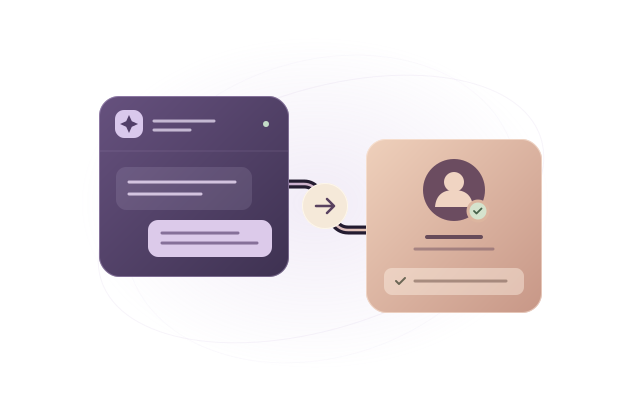
An assistant can answer a question in seconds and still leave a customer stuck. The important moment comes when the conversation reaches something it cannot decide: an exception, a disputed charge, or a commitment only your team can make.
Design that moment as carefully as the first greeting. A handoff is part of the service, and it needs an owner, enough context to continue, and an honest expectation for the customer.
Define the boundary before the greeting
Start with decisions, not a list of words the assistant should avoid. What can it explain using approved information? What can it collect? What needs someone with authority?
For a repair shop, explaining opening hours and collecting a vehicle model are straightforward. Confirming that an unfamiliar repair will be finished tomorrow is a different kind of action. Unless someone has checked capacity and parts, the assistant should collect the request and leave the commitment to the team.
Explain services, hours, and documented policies.
Ask for the details a person needs to take over.
Route exceptions and commitments to the team.
Write these boundaries with whoever actually answers customers. A rule that sounds reasonable in a meeting may fail on the first real conversation.
Use triggers your team can explain
A useful starting policy has three routes to a person:
- The customer asks for one. Do not make them justify the request or complete another questionnaire first.
- The request exceeds the assistant's authority. Examples include a refund exception, a custom quote, or a promise about availability that has not been verified.
- The conversation stops making progress. Repeated clarification, conflicting information, or an answer missing from the knowledge base should lead to a clear next step.
These are proposed operating rules, not a claim that every system detects each case automatically. Check how your own setup handles each trigger. In Liveline, escalation keywords and a conversation pipeline provide starting points; test your configuration with actual examples before relying on it.
Pass context, not just a notification
“Customer needs help” gives the next person almost nothing. A useful handoff note distinguishes what the customer said from what has been confirmed.
Example handoff: Customer wants a Saturday appointment for a 2018 hatchback with an intermittent starting issue. They can arrive after 10 AM. No price or appointment has been confirmed. Next step: the service team checks availability and replies in this thread.
Use that structure whether a person writes the note or your workflow produces it. Include the request, relevant details, what was already answered, and the decision still needed. Preserve access to the original thread so a summary never becomes the only record.
Avoid collecting information “just in case.” If the next person does not need it to resolve the request, it probably does not belong in the handoff.
Tell the customer what happens next
An internal stage change is invisible to the person waiting. Pair it with a message they can act on:
“Our service team needs to check Saturday availability. I have the vehicle details and your preferred time. They will continue here when the shop opens at 9 AM.”
Only use a response commitment your team can meet. If you do not have a reliable reply window, say when the team returns and that availability still needs confirmation. Do not imply a booking exists because the assistant collected a preferred time.
Test the transition, not only the answer
Before launch, rehearse a normal question, an explicit request for a person, an exception, and a case with missing information. For each, check the customer-facing reply and the receiving team's view.
Can the team find the conversation? Is someone responsible for checking the queue? Can they tell what remains unresolved without asking the customer to start again? Does automation stop or behave appropriately once a person takes over?
A fast first reply is useful. A conversation that reaches the right person with its context intact is what makes that speed matter.
For the information side of that workflow, read how to build a knowledge base your assistant can use.